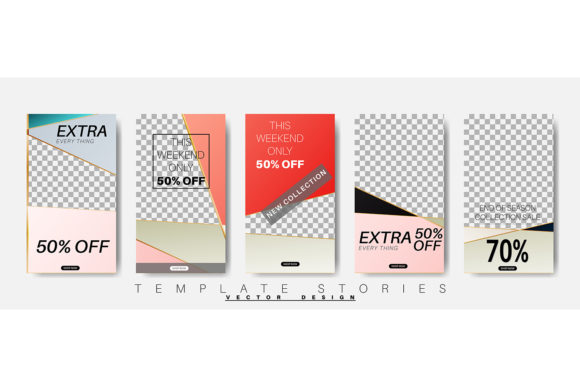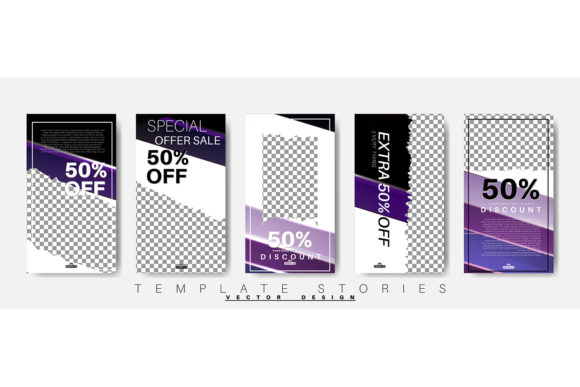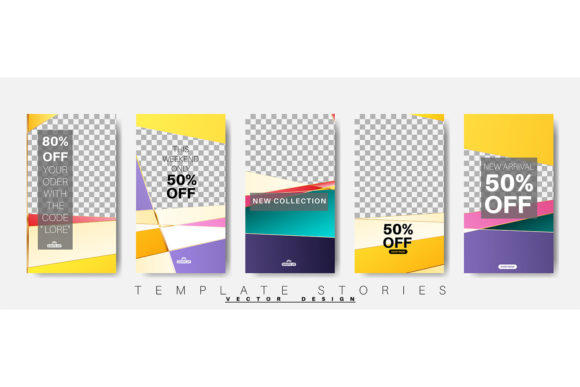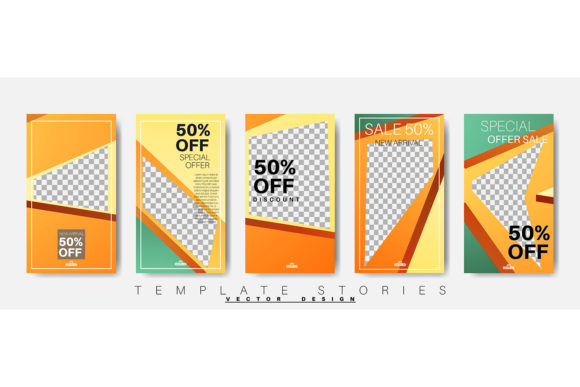
Evaluating Product Sale Banner Template 28 for Versatile Marketing Campaigns
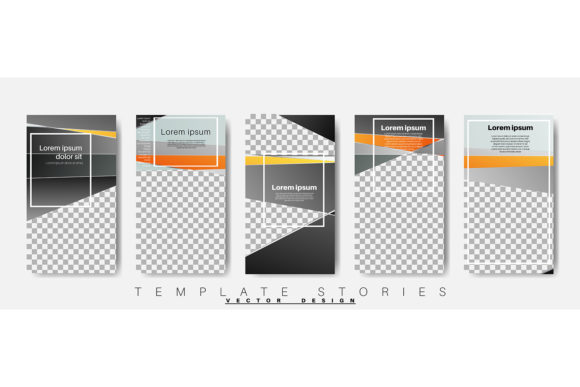
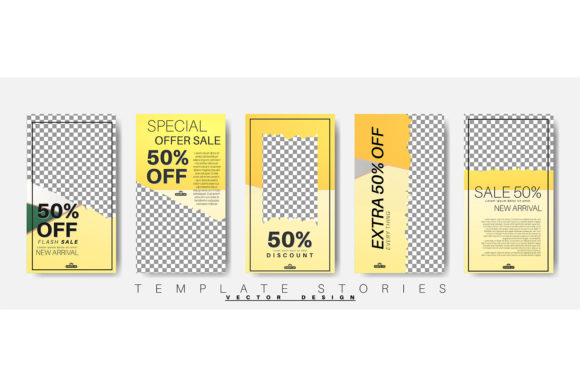
In the fast-paced world of digital and print marketing, the ability to adapt visual assets quickly is often the difference between a successful campaign and a missed opportunity. Professionals and small business owners alike frequently find themselves searching for resources that offer both aesthetic appeal and technical flexibility. Product Sale Banner Template 28 emerges as a specific solution within this landscape, designed to bridge the gap between static design and dynamic application. This resource is not merely a pre-made image; it is a foundational tool intended for backgrounds, social media stories, product catalogs, expandable and roll-up vertical banners, flyers, brochures, and digital displays. Understanding where this template fits into your broader workflow requires a clear evaluation of its features, format capabilities, and how it compares to other design approaches.
Defining the Scope and Utility of the Template
At its core, Product Sale Banner Template 28 is a vector-based design asset. Unlike raster images (such as standard JPEGs or PNGs) which are made of pixels and can lose quality when enlarged, this template utilizes VECTOR EPS 10 technology. This distinction is critical for professionals who need to deploy the same design across vastly different mediums. For instance, a graphic that looks sharp on an Instagram story must also remain crisp when printed on a six-foot tall roll-up banner for a trade show. The "100% vectors" specification ensures that every line, curve, and shape scales infinitely without degradation.
The versatility of this template lies in its intended multi-platform usage. Many design resources are siloed; a flyer template rarely works well as a digital display, and a social media story layout often fails when adapted for a printed brochure. However, this specific layout is engineered with expandability in mind. The structural elements are arranged to allow designers to reconfigure the composition for vertical banners or horizontal web headers without losing visual balance. This makes it a practical choice for businesses running integrated campaigns where brand consistency across physical and digital touchpoints is paramount.
Technical Advantages: The Vector EPS 10 Format
When evaluating design resources, the file format is often the most significant decision factor. Product Sale Banner Template 28 is delivered as an Adobe Illustrator file (EPS 10), accompanied by a JPEG sample preview. The choice of EPS 10 is strategic. It is a legacy-compatible format that ensures the file can be opened in a wide range of software versions, not just the latest release of Adobe Illustrator. This compatibility is vital for teams working with older hardware or those who prefer alternative vector editing software that supports the EPS standard.
The "All Objects Colors are editable" feature is another substantial technical benefit. In many lower-quality templates, colors are flattened or grouped in ways that make global changes difficult. With this template, the object structure allows for granular control. A designer can isolate specific elements—such as background gradients, text boxes, or decorative accents—and modify their color values instantly. This facilitates rapid A/B testing of color schemes to see what resonates best with a target audience before committing to a large print run or a week-long social media push.
Comparison with Raster-Based Alternatives
To fully appreciate the value of this vector template, it is helpful to compare it against raster-based alternatives commonly found in online marketplaces. Raster templates, often provided as layered PSD (Photoshop) files, rely on pixel density. If a user attempts to scale a raster flyer design up to the size of a vertical banner, the result is often pixelation and blurriness, rendering the asset unusable for large-format printing.
In contrast, Product Sale Banner Template 28 eliminates this risk entirely. While raster files might offer more complex photo-manipulation effects out of the box, they lack the scalability required for the diverse use cases listed in the template's description, such as roll-up banners and large digital displays. The trade-off here is clear: if your primary need is heavy photo retouching, a raster file might seem appealing initially. However, if your priority is adaptability across sizes—from a small mobile story to a large wall graphic—the vector approach of Template 28 is objectively superior.
Practical Applications and Workflow Integration
The real-world application of this template extends beyond simple aesthetics. Consider a retail business preparing for a seasonal sale. They need assets for in-store signage (roll-up banners), handouts (flyers and brochures), and online promotion (social media stories and digital displays). Traditionally, this would require creating three or four separate designs to ensure each fits its respective medium correctly. By utilizing Product Sale Banner Template 28, a designer can create a master vector file and then export variations for each channel.
This workflow efficiency is particularly beneficial for small teams or independent consultants who manage multiple aspects of a marketing strategy. The ability to edit the file in Adobe Illustrator means that updates can be made centrally. If a price changes or a date needs correction, the update is applied to the vector source, and all derivatives (the flyer, the banner, the story) can be regenerated with the new information intact. This reduces the likelihood of human error where one platform displays outdated information while others are updated.
Limitations and Skill Requirements
While the benefits are significant, it is important to acknowledge the limitations and requirements associated with this type of resource. The primary constraint is the necessity of vector editing software. The download includes an EPS file and a JPEG preview, but to unlock the "flexible and easy to edit" potential, the user must have access to Adobe Illustrator or a compatible vector editor. For users who rely solely on drag-and-drop online design tools or basic image viewers, this template will not be immediately usable without a conversion process or a learning curve.
Furthermore, while the template provides the structure and graphical elements, it does not replace the need for design judgment. The user is responsible for selecting appropriate typography, inserting high-quality product photography, and ensuring color contrast meets accessibility standards. The template offers the skeleton, but the flesh and blood of the campaign depend on the user's input. Those expecting a "one-click" solution where they simply type text into a web form may find the requirement to open and edit vector files daunting.
Decision Factors: Is This the Right Resource?
Determining whether Product Sale Banner Template 28 is the correct choice for your project involves weighing your specific needs against the template's strengths. This resource is ideally suited for:
- Brand Consistency Projects: When you need the same visual language to appear on a business card, a website banner, and a trade show booth.
- Long-Term Asset Creation: If you plan to reuse the design framework for multiple sales events throughout the year, the editable nature of the vector file saves time in the long run.
- Professional Print Production: For projects requiring high-resolution output for large-format printing, where pixelation is not an option.
Conversely, this template may not be the best fit if you require immediate, no-software-required edits or if your campaign relies heavily on complex, non-vector photo manipulations that are difficult to replicate in Illustrator. Additionally, if your distribution is strictly limited to low-resolution social media posts where scaling is never required, a simpler raster template might suffice, though you would lose the future-proofing benefit of vectors.
Making an Informed Choice
In the broader context of marketing resources, Product Sale Banner Template 28 represents a professional-grade investment. It shifts the burden of flexibility from the limitations of the file format to the capability of the designer. By providing a 100% vector foundation with editable colors and objects, it empowers users to create cohesive, high-quality visuals across a spectrum of media types. Whether adapting the layout for a vertical roll-up banner or refining the details for a digital display, the underlying architecture of the template supports a wide array of creative directions.
Ultimately, the value of this template is realized when it is treated as a modular component of a larger strategy. It is not just a picture to be downloaded; it is a versatile system for communication. For those equipped with the necessary software and a desire for scalable, professional results, it offers a robust solution that balances aesthetic potential with technical reliability. As with any design tool, the outcome depends on how well the user leverages its editable features to align with their specific brand goals and audience expectations.